


Experiential Marketing in Egypt and MENA: How Brand Experiences Are Scoped, Scaled and Measured
Experiential marketing is sold as creativity and bought as an event. It is neither. It is a build - a physical environment engineered to change what an audience believes about a brand, with a production chain and a measurement model behind it. This guide covers the three stages that decide whether it works: concept, scale, and impact.
What experiential marketing actually is - and what it is not
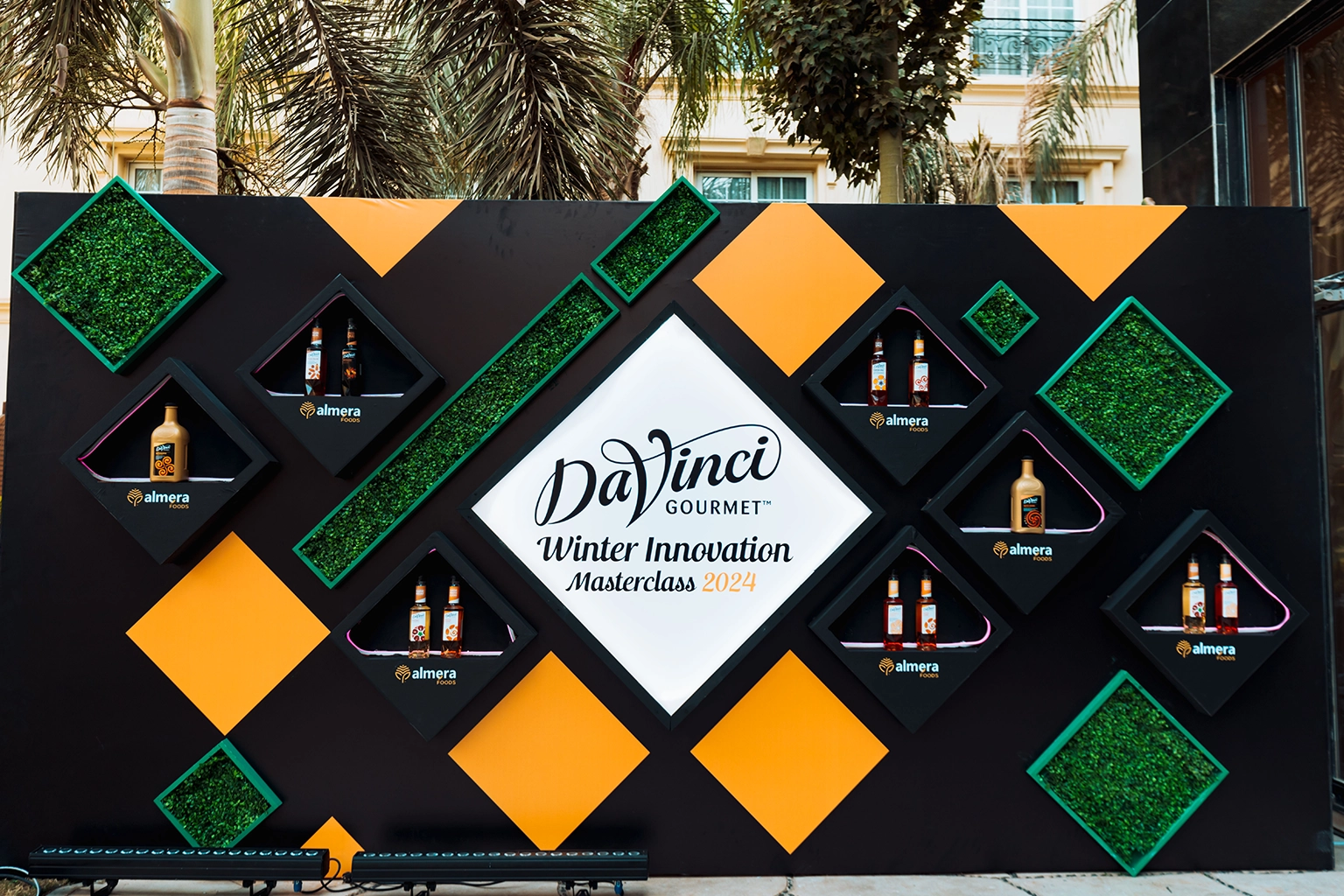
Experiential marketing puts an audience physically inside a brand idea and asks them to do something rather than watch something. The output is not attendance - it is a changed belief, a captured contact, a piece of content the audience made themselves, or a product they have now actually held.
That distinction matters commercially because the three things brands usually compare are priced and judged differently. A corporate event is measured by whether it ran well. A media campaign is measured by reach and cost per impression. An experiential activation is measured by depth: how many people engaged, for how long, what they did, and what they took away or shared. A brand that buys an activation and then asks for reach numbers has bought the wrong thing, or measured the right thing wrongly.
The confusion is expensive in both directions. Brands under-invest in experiential because they benchmark it against media cost per thousand, where it will always lose. Or they over-invest in a spectacular build that nobody interacts with, because the concept was designed to look good in a render rather than to work with a queue of real people in front of it.
| Approach | What it buys | Primary measure | Where it fails |
|---|---|---|---|
| Media campaign | Reach and frequency | Impressions, cost per thousand | Shallow recall, no product contact |
| Corporate event | A managed occasion for an invited audience | Attendance and satisfaction | Little behaviour change beyond the room |
| Experiential activation | Direct interaction with the brand or product | Engagement rate, dwell time, data captured, content created | Low footfall, or a build nobody is allowed to touch |
| Exhibition presence | Access to an existing qualified audience | Qualified conversations, leads | Stand designed for looks, not for stopping traffic |
The strongest programmes combine them deliberately: an activation creates the moment and the content, media amplifies it, and the event or exhibition puts it in front of a qualified audience. What breaks is buying one and expecting the results of another.
Concept: where a brand experience is actually decided
Concept is the cheapest stage to change and the most expensive to get wrong. Three inputs decide it, and all three should be settled before anyone draws anything.
The behaviour you want. Not the message - the behaviour. Taste the product. Try the machine. Ask the technician a question. Photograph yourself with it. Sign up. A concept built around a behaviour produces a design brief with a clear job; a concept built around a message produces decoration.
Then the honest brief question follows: what has to be true at the end for this to have worked? If the answer is "eight hundred people tried the product and four hundred left contact details", the build looks entirely different from a concept aiming for "one striking installation that gets photographed".
The audience and their state. The same idea performs differently depending on whether people arrive with time or in transit, alone or in groups, invited or intercepted. An activation inside a conference has a captive, unhurried audience and can afford a two-minute interaction. The same activation in a mall or at a public festival has seconds to stop someone, and must be legible from a distance and quick to enter.
The physical reality. Ceiling height, floor loading, power availability, access for the build, permitted working hours, and what the venue or landlord will actually approve. Concepts routinely die at this stage, and the cost of discovering it late is the whole design fee plus the schedule. A site visit before the second design round is the cheapest insurance in the process.
One test separates a strong concept from a weak one: describe it without adjectives. If what remains is a clear sequence - the audience sees this, does that, receives this - the concept is buildable. If what remains is a mood, it is not yet a concept.
Scale: turning a concept into something that survives real people
Scale is where experiential either becomes a business result or an expensive photograph. Four questions decide it.
How many people can pass through per hour? Throughput is the single most under-planned number in experiential marketing. If an interaction takes three minutes and one station serves one person at a time, that is twenty people per hour, one hundred and sixty across an eight-hour day. If the brief says two thousand, the concept needs multiple stations or a shorter interaction - and that is a design decision, not something to fix on the day with a longer queue.
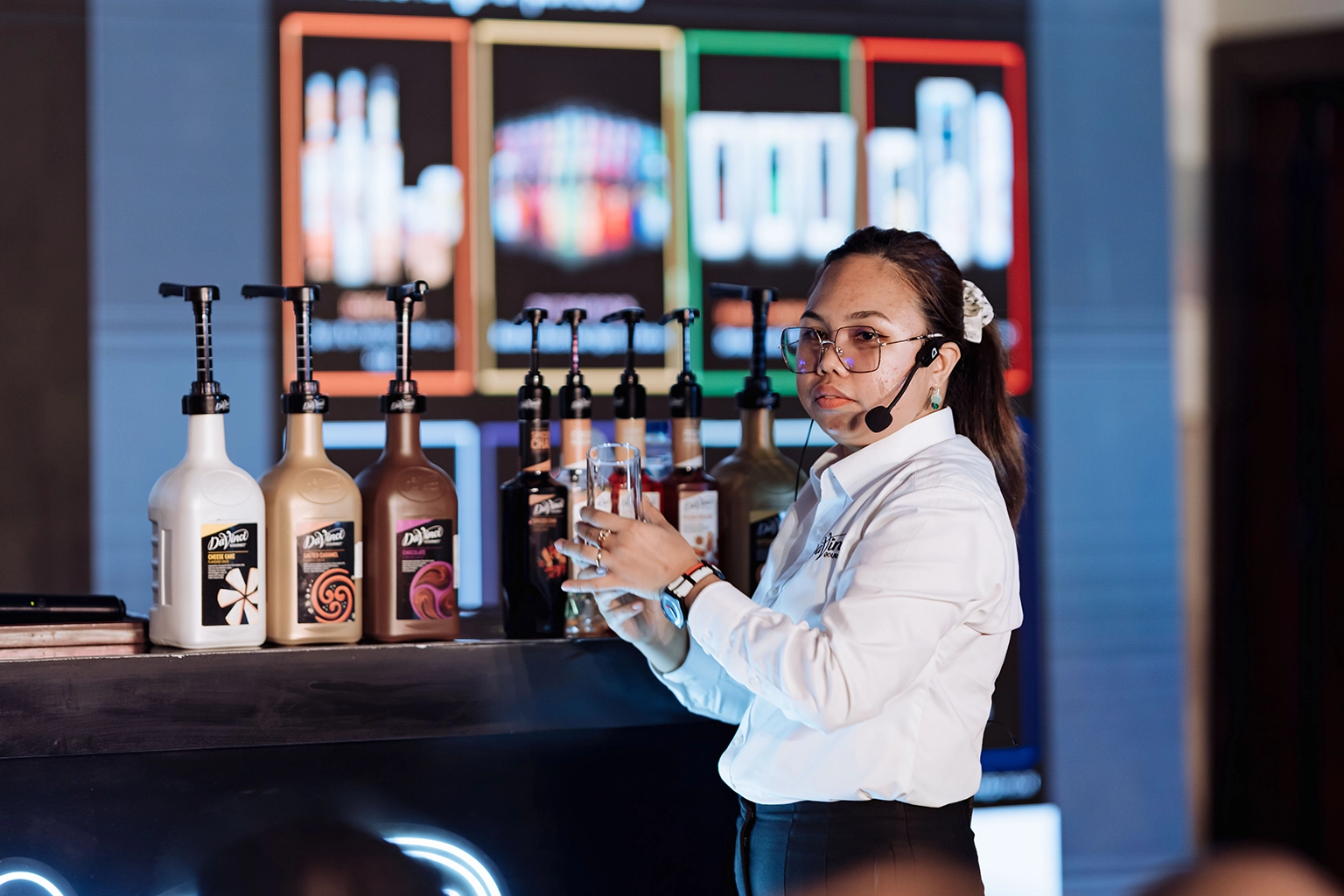
Who staffs it? Brand ambassadors are not decoration. They start the interaction, explain the product, handle the data capture, and reset the station. Understaffing an activation is the fastest way to destroy its numbers, because a visitor who waits without being greeted simply leaves. Budget a realistic ratio and brief the team properly on the product, not just the script.
Does it survive the eighth hour and the third day? Materials that look perfect in a render degrade under real traffic. Touch points get worn, graphics get scuffed, tablets run flat, giveaways run out at noon. Multi-day activations need a daily reset routine, consumable stock levels, and someone accountable for the state of the build each morning.
Can it be repeated? Many activations are built once and then required again in another city or another country. Designing for repeatability - modular structures, transportable elements, a documented build and setup guide - costs a little more the first time and dramatically less every time after. For brands operating across Egypt, KSA and the UAE, this decision alone often determines whether year two is affordable.
Impact: how brand experiences are measured
Experiential marketing loses budget arguments because it is measured casually. Six metrics are practical, cheap to collect, and defensible in front of a finance team.
Set the collection method before the build, not after. Counting requires a counter, dwell time requires someone timing or a system that logs it, and data capture requires a consented mechanism designed into the interaction rather than a clipboard added at the last minute.
A brand experience that cannot report how many people completed the interaction is not a campaign. It is a photograph with a budget attached.
Sara EventsOne caution on data: if the interaction collects contact details, agree in advance how that data is stored, who can access it during the activation, how consent is recorded, and what is handed over or deleted afterwards. This is increasingly the first question a client legal team asks, and it is easier to answer at the design stage.
Why activations underperform: five failures that repeat
The same handful of mistakes account for most disappointing experiential results, and all five are decided before the build starts.
1. The build is a display, not an interaction. A structure people photograph from outside and walk past has failed regardless of how good it looks. There must be an obvious entry action - something to pick up, taste, press, try or answer - and staff whose job is to invite people into it.
2. Placement was chosen for cost, not traffic. A cheaper corner position with a fraction of the footfall is not cheaper; it is a lower denominator on every metric you report afterwards. Walk the location at the actual hour the activation will run before committing, and count the people passing.
3. Throughput was never calculated. Interaction length multiplied by number of stations sets a hard ceiling on reach. Discovering that ceiling on day one, with a target that is four times higher, is the most common and least forgivable planning failure in the discipline.
4. Staff were briefed on a script, not the product. Visitors ask real questions. An ambassador who can only recite a line loses the interaction at the first follow-up. Brief the team on the product itself, the three most likely questions, and what to do when they do not know the answer.
5. Nobody owned the numbers on the day. If counting is everybody's job it is nobody's job. Assign one person per shift to record footfall, completed interactions and stock levels at fixed intervals. Reconstructing those numbers afterwards from memory produces a report nobody believes, including the person who wrote it.
Each of these is cheap to fix at concept stage and impossible to fix once the structure is built and standing in the wrong place.
The budget lines experiential carries that a normal event does not
An experiential budget looks unfamiliar to anyone used to booking events, and the unfamiliar lines are where quotes get compared unfairly.
Design and fabrication. Concept development, technical drawings, and the physical build. This is usually the largest single line and the one most affected by material choice and whether the structure is designed to be reused.
Staffing. Brand ambassadors, a supervisor, and technical support for the run of the activation - not just the setup. Multi-day activations need shift planning, and staff cost scales with hours, not with build size.
Consumables. Product samples, giveaways, printed material, and anything the audience takes away. This is the line that runs out at midday if the throughput estimate was optimistic.
Content capture. Photography, video, and editing. For most brands the content is a primary deliverable rather than a nice extra, because it feeds the media campaign that follows.
Install, dismantle and storage. Build time, overnight or out-of-hours labour where the venue requires it, transport, and - the line most often forgotten - what happens to the structure afterwards. Storage for reuse costs money; disposal also costs money. One of the two will apply.
Permits and venue conditions. Landlord approvals, insurance, power connection fees, and any venue-imposed contractor requirements. In malls and public spaces these can be significant and are rarely visible in a first quote.
When comparing proposals, insist on these as separate lines. A bundled figure hides whether the difference between two quotes is the build quality, the staffing level, or simply what one supplier left out.
Experiential, launch, or exhibition: choosing the right vehicle
Three formats overlap and are frequently confused in the brief. The choice should follow the objective, not the budget line it is easiest to spend from.
Choose a product launch event when the audience is invited and known - press, partners, distributors, internal teams - and the objective is a controlled first impression with a clear narrative and a moment. The audience is captive; the challenge is the story and the production.
Choose an exhibition presence when the audience already exists in one place and is qualified by attending. The challenge is standing out in a hall of competitors and converting conversations into pipeline. Sara Events covers this scope in its exhibitions and booth design work.
Choose an experiential activation when the audience is not yet interested and has to be stopped, engaged and converted in the moment. The challenge is throughput, staffing and a concept that works at the speed real people move.
Sara Events builds all three inside one team - concept and design, fabrication, production and technical management, staffing, content capture, and on-ground delivery across Egypt, KSA, UAE and the wider region - which matters most when a single idea has to run as an activation in one market and an exhibition presence in the next without being redesigned from scratch. This sits inside the wider corporate event management scope.
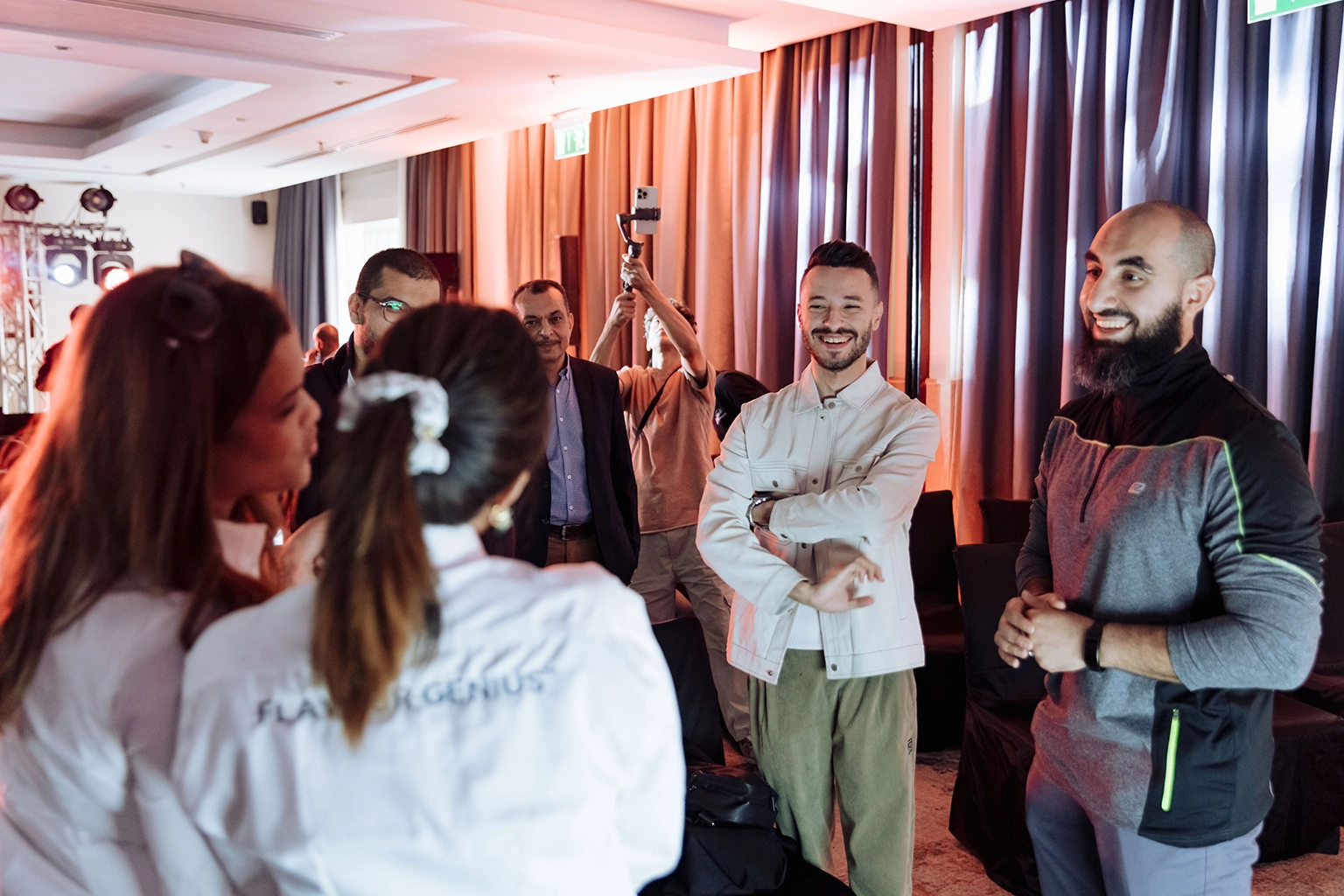
The recap below shows an experiential brand programme delivered end to end: custom product environment, live demonstration stations, guest interaction, and content capture running throughout.
Frequently asked questions
How is experiential marketing different from event management?
Event management delivers a managed occasion for an invited audience and is judged on whether it ran well. Experiential marketing builds an environment that changes what an audience believes or does, and is judged on engagement, dwell time, data captured and content created. The disciplines overlap in production but differ completely in what counts as success.
How far in advance should an activation be planned?
Allow eight to twelve weeks for a custom-fabricated activation: two to three for concept and approvals, three to four for technical drawings and fabrication, and the balance for permits, staffing and install. Simpler modular activations can move faster; anything requiring landlord or municipal approval should start earlier.
What is a realistic engagement rate?
It depends entirely on placement and how quick the interaction is, so treat any promised universal benchmark with suspicion. The useful discipline is to set your own target before the activation based on expected footfall and station throughput, then measure against it and use the result as the benchmark for the next one.
Can one activation concept run in Egypt, KSA and the UAE?
Yes, if it is designed for it. That means modular construction, transportable elements, bilingual content prepared from the start, and a documented build guide. Retrofitting a one-market build for a second country usually costs more than designing for repeatability at the outset.
What should an experiential proposal include?
Separate lines for design and fabrication, staffing, consumables, content capture, install and dismantle, storage or disposal, and permits. It should also state expected throughput per station, the staffing ratio, and how engagement will be counted. A bundled total without these is not comparable to anything.
Key takeaways
Concept. Scale. Impact. The middle one is where most experiential budgets are decided and where most of them quietly fail.
Request a Tailored ProposalPlanning a brand experience or activation?
Share the objective and Sara Events will scope the right approach - concept, design and fabrication, staffing, content capture and on-ground delivery included.
- Response within 24 hours
- Dedicated account manager
- Free initial consultation