


Best Corporate Event Production Companies for Gala Dinners in Egypt and MENA
A gala dinner is not a scaled-up reception. It runs on a fixed clock: VIP arrivals, protocol seating, award cues between courses, and entertainment pacing that absorbs overruns without stranding 400 guests mid-plate. This guide compares the provider types you are realistically choosing between in Egypt and MENA - and shows exactly what a production partner must own from briefing to reporting.
Corporate gala dinners: what to compare before you book a production team

A gala dinner runs on a fixed clock: guests arrive in waves, VIPs need a controlled entry and holding route, service must clear before the awards block, speaker cues have to land between courses, and entertainment pacing has to absorb any overrun without stranding a room of 400 people mid-plate. Ranking-style lists tend to score agencies on breadth or review volume rather than on whether they can hold that run of show under pressure.
That gap matters for corporate, government, and NGO planners alike. Published directory rate bands tell you an hourly range and a headcount; they do not tell you who owns catering timing, stage and lighting calls, registration desks, or media access on the night - and for a diplomatic dinner or a donor gala, those are the details that determine whether the evening runs on schedule.
Compare shortlisted teams on five things: venue operations, production planning, entertainment sourcing, on-site execution, and how guest data from delegate registration is collected, secured, and reported afterwards. Ask for named owners per workstream, not a single account manager.
Geography changes the answer too. Cairo galas, Gulf programmes, and cross-border MENA delivery each carry different permitting rhythms, protocol expectations, and supplier depth, so capability in one market rarely transfers unchanged to the next - a team that runs a flawless Cairo ballroom dinner may still need to prove it can replicate arrival protocol and technical setup in Riyadh or Dubai.
The sections below compare the provider types you are realistically choosing between for a gala dinner in Egypt or the wider region - a full-service production company, a hotel or venue in-house team, an international destination management company, and a local boutique planner - with an honest read of what each is strong at and where the gaps typically show up.
Comparison table: gala provider types, best use cases, and pricing signals
| Provider type | Best for | Standout capability | Pricing signal |
|---|---|---|---|
| Full-service production company | Institutional, diplomatic, and corporate galas needing one accountable team from planning to teardown | Gala planning inside a full stack: registration, production and technical management, catering coordination, PR and media, VIP and protocol management across Egypt, KSA, UAE | Quote-based; budgets need a scoped brief |
| Hotel / venue in-house team | Galas confined to a single property where F&B and room logistics carry the evening | Deep control of catering execution, banquet service, and room turnover inside that venue | Often bundled into F&B minimums and venue rental |
| International DMC | Destination galas where venue sourcing and guest experience for one market matter most | Local venue access, ground logistics, and guest-experience design for one destination | Destination day-rate on top of venue and catering |
| Local boutique planner | Single-market galas prioritizing cost efficiency and local vendor relationships | Market familiarity, permit handling, established local vendor bench | Local hourly or day rates, generally lower |
1. Full-service production companies - the worked example: Sara Events
Best suited to organizations running a gala dinner where the guest list carries protocol weight - ministries, embassies, development agencies, NGO donor boards, and senior corporate leadership - and where one accountable team is preferable to stitching together five suppliers on the night.
Sara Events, the events division of Sara Communications, lists corporate gala dinner planning as a named event type, alongside a service stack that covers the moving parts of a gala in sequence: registration and ticketing with QR check-in, badge printing and attendance reporting; event production and technical management spanning stage design, lighting, sound and LED; catering and hospitality coordination; PR and media coverage; photography and videography for post-event content assets; and VIP and protocol management covering arrival flow, guest seating, and diplomatic protocol. The company brings 22+ years of communications and events expertise with delivery across Egypt, KSA, UAE, Libya and beyond - which matters if a single gala format has to be repeated in Cairo and then in the Gulf, or adapted for a government delegation with its own protocol requirements.
One production lead who owns staging, catering timing, and protocol simultaneously can make the call in real time. A coalition of separate vendors usually cannot.
Sara EventsThe value of this model is that one team is accountable for the handoffs that usually cause gala-night problems: the moment service needs to clear before the awards segment, the moment VIP arrivals need to be held rather than seated immediately, the moment a speaker runs long and the entertainment block needs to compress.
The tradeoff is honest: the strength here is breadth and on-ground control across corporate event management, not a narrow specialization in any one discipline. If your gala is built around a highly specific technical requirement - an elaborate broadcast package, for instance - ask directly how that element is staffed and which parts, if any, are subcontracted.
2. Hotel and venue in-house teams - strong on-property, limited beyond it

Hotel and venue in-house teams suit galas that are confined to a single property and where food and beverage quality is the dominant success metric. These teams typically run banquet service every week, know their kitchen's capacity at scale, and can turn a ballroom from a conference layout to a formal dinner setup faster than an outside crew because they control the space and the staff already assigned to it.
That strength is also the boundary. In-house teams are built around their own property's F&B execution and room logistics, not independent stage, lighting, and sound production. Most venues maintain an approved vendor list for AV and staging rather than an in-house technical department, which means a gala with a real production requirement - a branded stage set, a lighting design that matches a sponsor's identity, a multi-camera awards segment - is still being delivered by a subcontracted crew, just one selected by the venue rather than by the client.
Protocol and VIP handling for diplomatic or senior government guests is another gap worth checking directly. Banquet staff are trained on service standards, not on arrival sequencing for a minister's delegation or holding routes for a mixed diplomatic and corporate guest list. And because in-house teams are tied to one property, consistency across multiple cities or countries is not something they are set up to guarantee - a gala repeated in Cairo one year and Abu Dhabi the next will likely be run by two entirely different teams with no shared institutional memory of the format.
The practical result: venues are often the strongest option for the room and the meal, and often steer buyers toward their in-house vendor list and F&B minimums for everything else. Ask what is genuinely in-house versus what the venue is simply recommending, and get the AV and staging quote itemized separately from the food and beverage contract.
3. International DMCs - strong on destination logistics, lighter on owned production
International destination management companies are built for exactly what their name says: managing a destination for a client who is not based there. For a gala tied to a single market or a single event - an international conference dinner, a destination awards night, a one-off leadership offsite - a DMC's strength is venue sourcing, ground logistics, and guest-experience design tuned to that specific location and guest profile.
That specialization means DMCs are frequently excellent at the guest-facing layer: arrival transfers, welcome experiences, off-site excursions tied to the gala programme, and a curated shortlist of venues that fit the brief. For a single-market, single-event brief, that local intelligence is difficult to replicate from outside the destination.
Where the model needs verification is technical production and protocol staffing. DMCs typically coordinate a network of local suppliers for stage, lighting, sound, and entertainment rather than employing that production capability directly, which means the DMC's role on the night can be closer to project management than hands-on delivery. That is not necessarily a weakness, but it changes who is accountable if a technical cue is missed or an entertainment act runs over - the answer may be a subcontractor the DMC does not directly manage.
Protocol depth is the second item to confirm. A DMC skilled at destination logistics is not automatically skilled at diplomatic seating precedence or VIP holding sequences for a mixed government and corporate guest list; that expertise sits with specific staff, not with the DMC model generally. Before contracting, ask exactly what is delivered in-house versus subcontracted, who signs off the technical schedule on show day, and whether the named protocol lead has handled a comparable guest list before.
4. Local boutique planners - strong market access, lighter on integrated production
Local boutique planners are the right fit for a gala that sits entirely inside one country - a Cairo ballroom dinner, a Riyadh corporate evening, a Dubai NGO fundraiser - where cost efficiency and speed of local execution matter more than cross-border repeatability. These firms typically carry deep relationships with local venues, know the realistic timeline for permits, and can mobilise a trusted vendor bench quickly because they have worked with the same suppliers for years.
That local familiarity extends to the practical friction points a gala hits in any single market: which venues genuinely allow outside catering, which routes work for VIP arrival given traffic patterns on the event day, and which local entertainment acts are reliable versus which look good on a reel but are difficult to book on short notice. For a single-market gala on a tighter budget, that knowledge often translates directly into cost savings.
The tradeoff shows up in two places. First, integrated technical production - a boutique planner may manage the stage, lighting, and sound vendors as separate line items rather than as one production department with a single point of accountability, which increases the coordination burden on the client's own team during planning and on show day. Second, cross-border delivery and diplomatic protocol experience tend to be thinner; a boutique team strong in Cairo may have never staffed an arrival sequence for a foreign delegation or built a seating plan around diplomatic precedence, simply because that scenario has not come up in their client base.
None of this rules a boutique planner out for a single-market corporate or NGO gala with a modest guest list and no diplomatic protocol requirement. It does mean the buyer, not the planner, ends up owning the integration between vendors - so build in extra planning time and ask for a single named point of contact who will be present through load-in, service, and teardown.
Gala dinner budget lines and hidden costs
A gala budget usually breaks into five lines: venue rental and F&B minimums, AV and staging (lighting, sound, LED, rigging), decor and branding, entertainment and talent fees, and protocol or security add-ons for VIP guests. Each line has a headline number and a place where the real cost tends to hide.
Venue rental is rarely the expensive part - the F&B minimum usually is. Many venues quote a per-cover catering rate that assumes a guest count higher than the actual confirmed attendance, so the client ends up paying the minimum regardless of who shows up. Confirm the minimum against a realistic RSVP estimate before signing, not against the aspirational invite list.
AV and staging quotes commonly exclude power distribution and rigging as separate line items. A lighting and sound package can look reasonable until the venue charges separately for generator power, rigging points in a ballroom ceiling, or extended load-in hours - all of which should be confirmed in the venue contract, not assumed to be included in the production quote.
Entertainment and talent fees carry two hidden risks: rider requirements (transport, accommodation, technical specifications) that are not in the headline fee, and cancellation or rebooking costs if the act is moved or the programme changes late. Ask for the full rider before contracting, not after.
Decor and branding costs often omit strike - the removal and disposal of a custom stage set, floral installations, or branded structures after the event, which can be a meaningful cost on its own for a large-format gala. And protocol or security add-ons for VIP or diplomatic guests - additional staffing for arrival management, holding areas, or credential checks - are frequently quoted separately and late in the process. Ask for this line item up front if your guest list includes government or diplomatic attendees.
Gala run-of-show and VIP protocol for Egypt and MENA
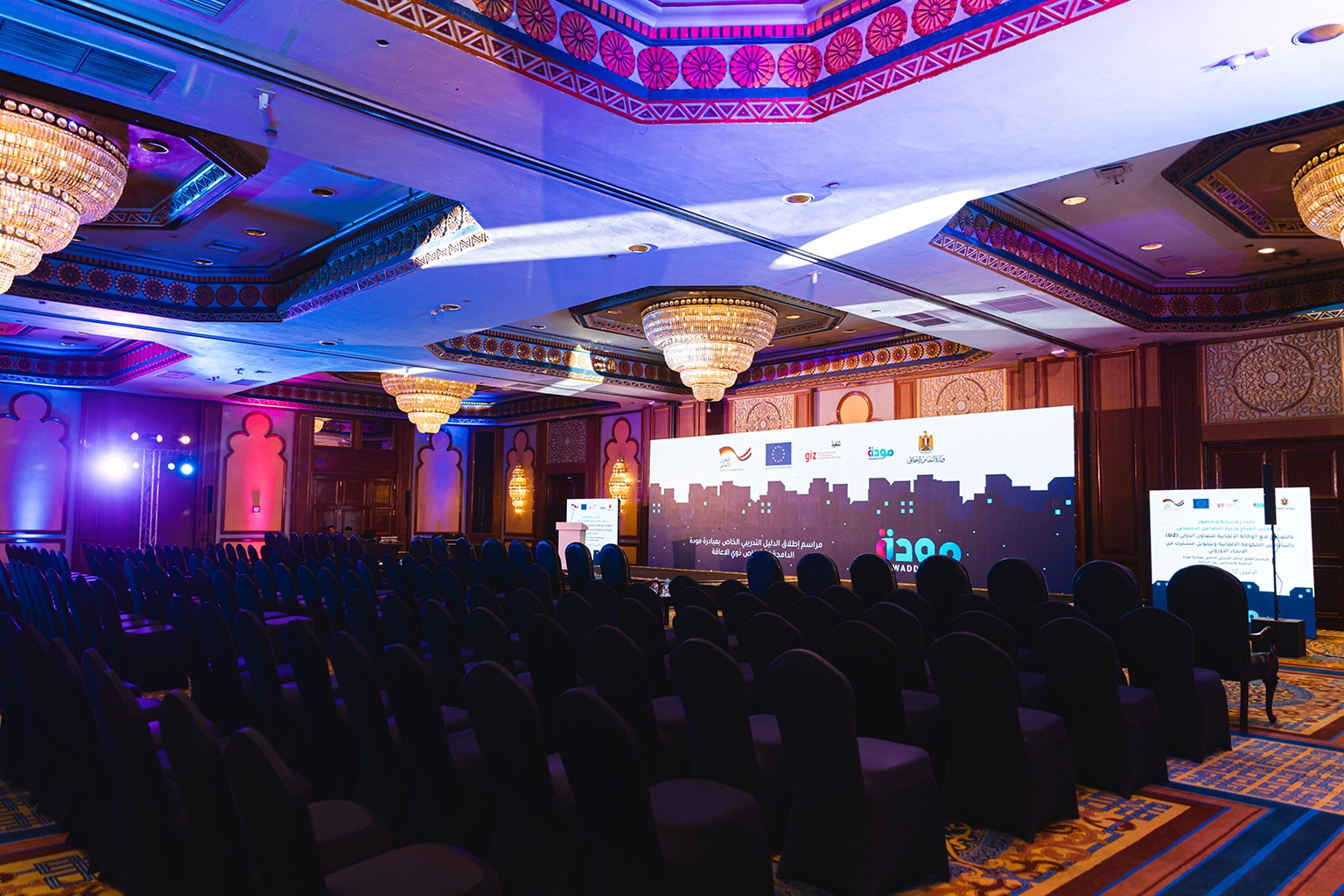
For corporate, government, and NGO planners running a gala in Egypt or the wider MENA region, the run-of-show document is where protocol expectations either get resolved on paper or get discovered live in front of guests. Three elements deserve specific attention: seating precedence, VIP arrival sequencing, and award-ceremony cue timing.
Seating precedence matters most when the guest list mixes government, diplomatic, and corporate attendees. Precedence is typically driven by official rank and diplomatic seniority first, then by host-organization hierarchy and sponsor tier. The safest approach is to confirm precedence with each government or diplomatic office directly rather than assume a standard order, since protocol expectations vary by country and occasion - and a seating error at the head table is visible to every other guest in the room.
VIP arrival sequencing needs a holding route separate from the general guest flow: a dedicated arrival point, a brief holding area away from press and general seating, and a controlled entry into the main room at a scheduled moment. This sequencing should be written into the run-of-show with named staff assigned to each handoff point - who receives the guest at the car, who escorts them to holding, who cues their entry.
Award-ceremony sequencing is the third pressure point. The run-of-show should specify cue-to-cue timing for each award: who is announced, who walks on from which side of the stage, how long the photo moment runs, and who keeps the segment on schedule if a recipient speech runs long. A written cue sheet shared with the stage manager, the MC, and the AV operator prevents the most common gala failure - an awards segment that overruns and pushes dinner service, entertainment, and departures later than planned.
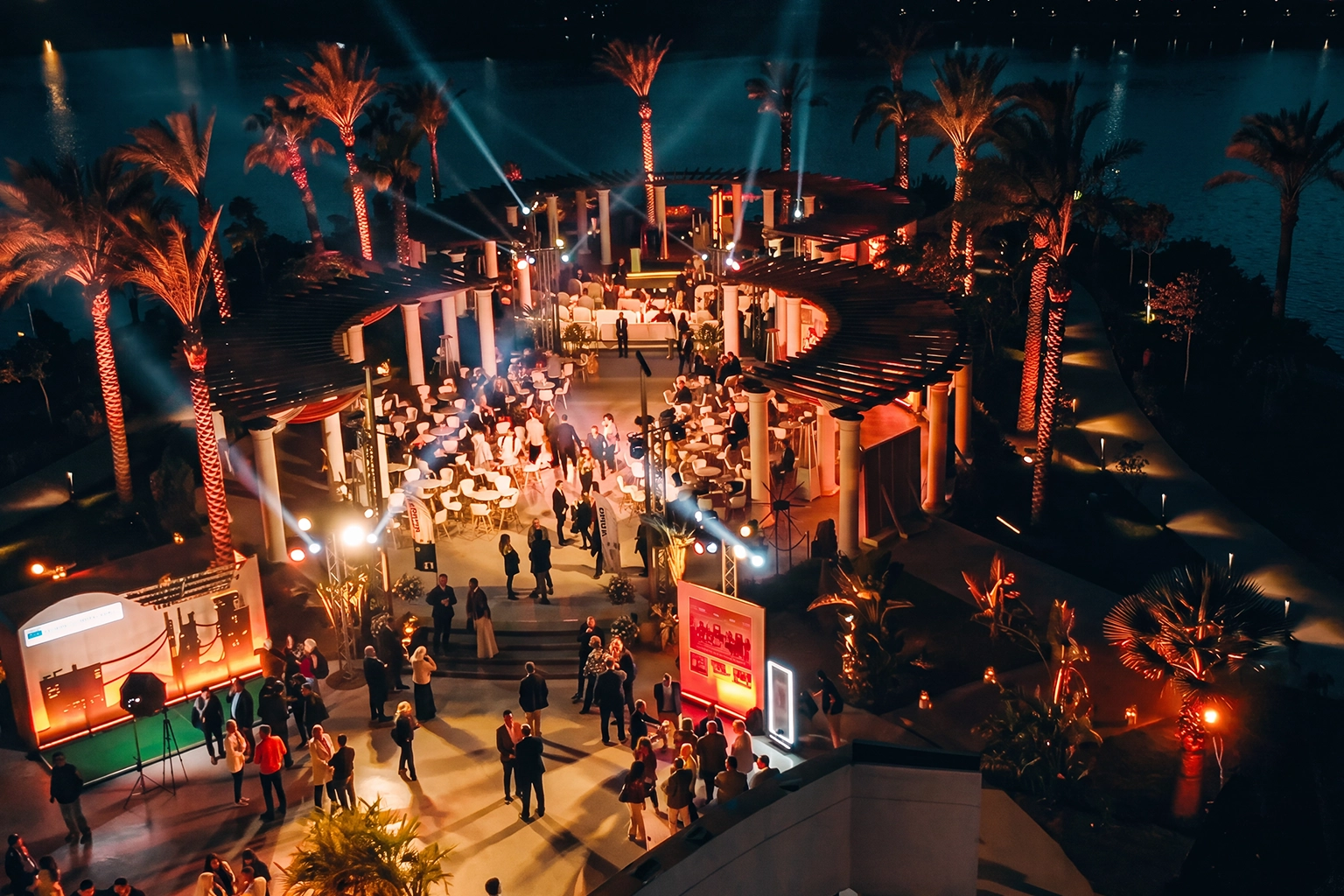
The recap below shows Sara Events' team delivering a large-format outdoor gala environment - venue build, lighting, staging, and hospitality zones under one production lead.
Frequently asked questions
How far in advance should we book a gala production partner?
For a gala with 200 or more guests, VIP or diplomatic attendees, or a cross-border delivery requirement, book three to six months ahead to allow time for venue negotiation, protocol confirmation, and entertainment booking. Smaller single-market dinners can sometimes be arranged within six to eight weeks, but permit timelines and venue availability in Egypt and the Gulf compress quickly during peak season.
What is the difference between a general event agency and a full-service production company?
A general event agency typically coordinates a plan and manages vendors on the client's behalf, while a full-service production company delivers most core workstreams - registration, technical production, catering coordination, PR and media, and protocol - with its own accountable staff. The practical difference shows up on the night: fewer handoffs, and one team empowered to make real-time calls on timing.
How is VIP and diplomatic protocol handled at a corporate gala?
Protocol is planned as its own workstream, not folded into general guest management. It covers seating precedence confirmed with relevant offices, a dedicated VIP arrival and holding route separate from general guest flow, and named staff assigned to greet, escort, and cue each senior guest at the correct moment in the run-of-show.
What belongs in a gala run-of-show document?
A complete run-of-show includes arrival windows for VIP and general guests, the full seating and table plan, catering service timing mapped against the programme, the award or speaker sequence with cue-to-cue timing, entertainment segments and their length, and named staff responsible for each handoff. It should be shared with every supplier team, not held internally by one coordinator.
How is guest and attendance data handled after the event?
Data collected at registration and check-in - attendance counts, dietary and access requirements, and contact details - should be reported back to the client after the event along with photography, videography, and media coverage. Ask in advance how that data is stored, who has access during the event, and what is deleted or returned once reporting is complete.
What a strong gala production partner should own from briefing to reporting
Before signing, ask a shortlisted team to name the person accountable for each handoff: venue contracting, catering and hospitality, delegate registration and check-in, the technical crew running stage, lighting, sound and LED, PR and media coverage, and on-ground management on the night. Where a provider subcontracts any of this, ask which staff member sits in the room during the event and who signs off changes in real time.
Compare providers on who owns what, not on the size of the name or the length of a client list. Whether you are planning on behalf of a corporate leadership team, a government ministry, or an NGO donor board, the questions above apply the same way. For a direct brief on gala production across Egypt, KSA, and the UAE, send your requirements through the form below.
Request a Tailored ProposalPlanning a gala dinner?
Share your gala basics and Sara Events will scope the right production approach - venue, staging, catering coordination, entertainment, protocol, and on-ground delivery included.
- Response within 24 hours
- Dedicated account manager
- Free initial consultation