


How to Evaluate a Conference Planner's Portfolio in 2026
Attractive stage photography tells you nothing about delegate flow, speaker timing, or protocol handling. This guide gives corporate, NGO, and institutional buyers in Egypt and MENA a four-part scoring framework for reading a conference planner's portfolio as evidence - what to demand, what to discount, and the red flags that should remove a company from your shortlist.
Step 1: Set the portfolio review up before you contact any planner

Before you look at a single gallery, write down the decision you are actually making: which planner can absorb risk, hold a timeline, and manage stakeholder expectations on your specific conference - not which one shoots the best photography. Attractive stage images tell you nothing about delegate flow, speaker timing, or the handoff between registration, stage, and technical teams.
Assemble the inputs first. You need five things on paper before outreach:
This preparation matters more in Egypt and the wider MENA region than in a single-market context. A conference in Cairo, Riyadh, or Abu Dhabi routinely stacks government approvals, sponsor obligations, and protocol on top of standard logistics - a ministerial forum at a Nile-side hotel or a development summit in the New Administrative Capital brings security sweeps, VIP arrival sequencing, and bilingual registration that a generic events portfolio will not show. Write these requirements into the brief before outreach, not after a planner has already pitched you a deck.
Keep the first pass narrow. Ask only whether the portfolio contains genuine conference and forum work at comparable scale, recency, and logistics complexity. Broad service lists and styling shots come later, if at all.
The steps that follow give you a weighted scoring method, what a strong conference management portfolio actually shows, the red flags worth walking away from, how Sara Events documents its own delivery record, and how to convert your notes into a defensible shortlist.
Step 2: Use a numbered framework to score event type, scale, logistics, and proof of results

Score every shortlisted portfolio against the same four checks, in the same order, so two reviewers reach comparable conclusions.
1. Match the event type. Confirm the planner has delivered your exact format - single-track conference, multi-day forum, product launch, internal town hall, or a multi-session programme with parallel tracks. A launch portfolio does not prove competence in a three-stream forum with simultaneous interpretation. A planner who has run a 250-delegate corporate town hall in Dubai has not necessarily shown they can manage a three-stream government forum in Cairo with Arabic-English interpretation and ministerial protocol layered on top. Weight recent work most heavily: published evaluation guides for event production advise treating projects from the last 24 months as the meaningful sample.
2. Test scale, not just polish. Look for delegate volume, venue footprint, number of concurrent rooms, and days of live operation. The benchmark is equal or greater complexity than your event, not a similar-looking photograph. In MENA, scale often means more than headcount - a 500-delegate conference split across two ballrooms at a Riyadh hotel, or a development forum drawing delegations from a dozen countries into one venue, carries logistics complexity that outstrips a single-room event of similar size. Vendor-vetting checklists used by professional venue platforms make the same point from the buyer side: judge relevance by event size, audience type, and technical complexity together.
3. Interrogate logistics evidence. Conference delivery lives in the handoffs. Ask for proof of registration accuracy on arrival day, speaker timing against published agendas, the stage-to-technical handoff sequence, VIP and protocol management, and who ran on-ground management. Ask specifically how the planner has handled bilingual Arabic-English registration, VIP arrival timing at government-secured venues, and coordination with local authorities in Egypt, KSA, or the UAE - recurring pressure points regional buyers report. Documented planning artefacts count here: senior event directors recommend asking for timelines, budget control methods, and at least three fallback options per critical dependency, and cite historical budget overruns under 8 percent as a credible performance signal.
4. Demand proof of results. Vague praise is not evidence. Ask for named case studies, attendee numbers, and measurable outcomes - and extend that to repeat engagements with the same client, contactable references, and one documented example of an issue resolved mid-event. A planner who can point to a repeat mandate - running the same government or donor conference for three consecutive years in Cairo, for instance - is showing more than a one-off success. One widely used evaluation model weights reference checks at 35 percent of the assessment versus 15 percent for the portfolio itself - a useful corrective if a deck is doing more persuading than the phone calls.
Expected outcome: a four-part score per planner, with gaps you can raise directly in the scoping conversation.
Step 3: Read portfolio examples for institutional, diplomatic, development, and corporate events
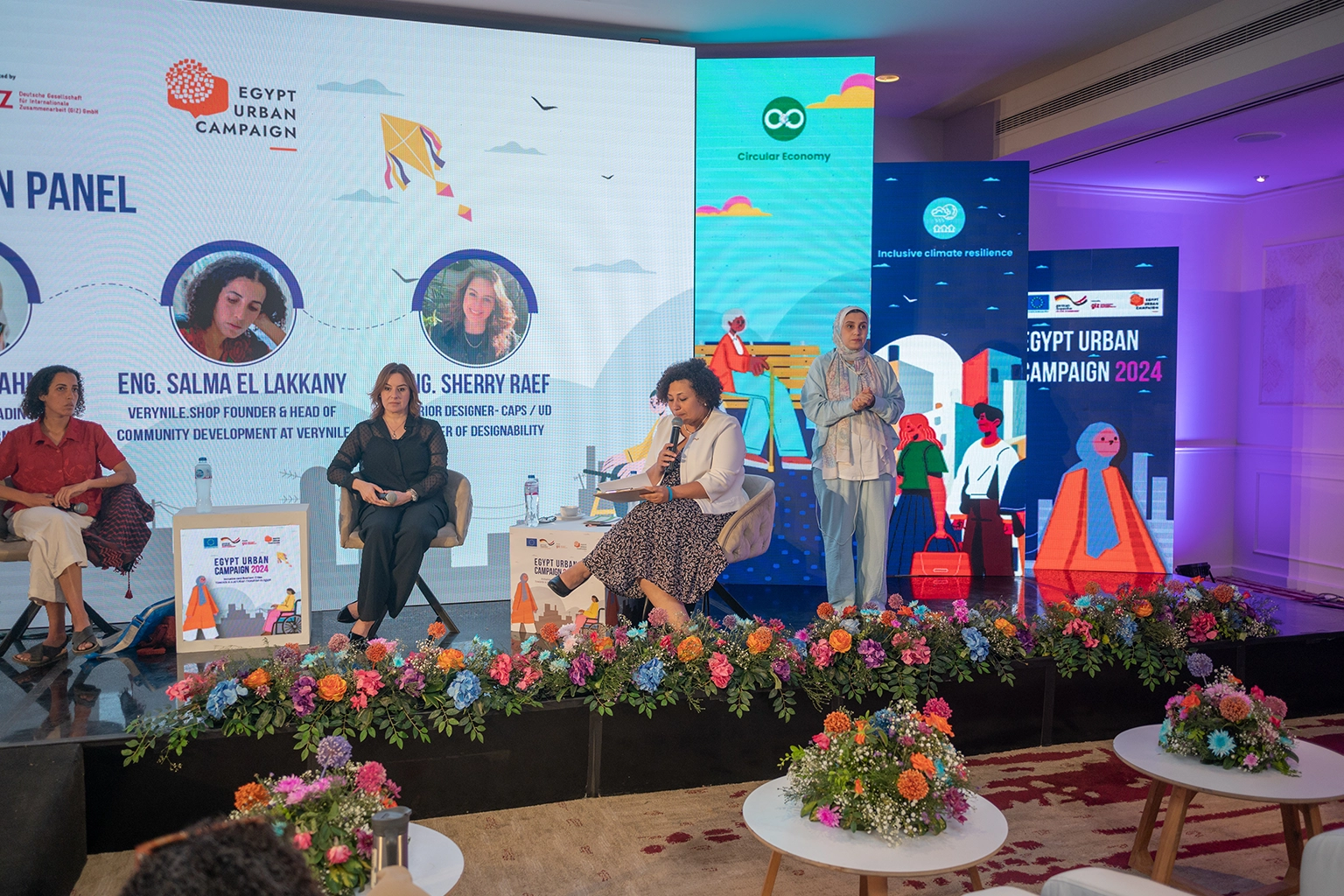
Ask each shortlisted planner for four to six full case examples rather than a gallery, and read them against the format you are actually buying. A usable example states the event context, the planner's actual role (lead agency, production partner, or subcontractor), the delivery scope, and what happened afterwards - attendance against target, agenda adherence, or client-reported satisfaction. Polished venue photography proves a camera was present, not that delegate flow held. Two working filters: the work should match or exceed your scale, and most of it should be from the last 24 months, since teams, suppliers, and technical stacks turn over quickly.
What to look for by format:
- Institutional events: a published formal agenda, delegate handling volumes, evidence of protocol sensitivity, and coordination across several stakeholder bodies with competing approval chains. In Egypt or the wider MENA region, this could be a multi-ministry policy conference where the agenda passed through several government offices for sign-off before delegates ever received it.
- Diplomatic events: VIP movement plans, seating order and precedence, security liaison, and controlled timing - arrival windows, motorcade sequencing, and how overruns were absorbed without breaking the order of speakers. A relevant example might be a state-visit-linked forum in Abu Dhabi or Riyadh with strict seating precedence for heads of delegation and a rehearsed contingency for a delayed arrival.
- Development events: multi-stakeholder attendance across donors, government, and civil society; speaker flow across parallel sessions; registration discipline for accreditation and badge accuracy; and continuity signals such as repeat editions or documented follow-up. Look for a donor-funded regional forum in Cairo or Amman bringing together international agencies, government ministries, and civil-society groups across a multi-day agenda as a comparable reference point.
- Corporate events: conference production and stage management, breakout room turnaround, the handoff between registration, stage, and technical teams, sponsor visibility placement, and measurable results like verified attendance, session dwell, or post-event survey scores. A regional headquarters launch in Riyadh or Dubai, with parallel Arabic and English breakout tracks and sponsor booths tied into exhibition space, is a useful benchmark case.
Read work across all four formats with the same test: the scope and the outcome matter more than the photograph.
Sara EventsRed flags at this stage: unnamed clients with no explanation, results described only as "successful," identical copy across case studies, and portfolios where every image is an empty room before doors open. Expected outcome of this step - a shortlist where each planner has proven conference management work in your format and at your scale.
Step 4: Spot weak or misleading portfolio evidence before it affects the shortlist

Read every portfolio entry against one test: does it prove the team ran the event, or only that it attended one? Polished galleries fail this test often. Wide-angle crowd shots, styled detail photography, and renderings without a matching on-site image show design intent, not delivery. Ask which parts of the job the planner actually held - registration desk, stage calls, technical handoff, protocol movements - and remove any entry where that answer stays vague. The expected outcome is a shortlist where each cited event has a named scope of work behind it.
Red flags worth deducting points for:
Score what is documented. Discount what is merely displayed.
Step 5: Compare shortlisted companies and choose the best fit
Score your final two or three companies on one sheet, using identical criteria, the same evidence set, and the same notes. Ask each finalist for the same three comparable conferences, put the same questions to references, and request the same documents - timeline, staffing plan, run-of-show, and budget controls. Comparisons collapse when one company is judged on a highlight reel and another on a full delivery file.
Use a simple scoring sheet to make the comparison explicit. Score each criterion from 1 (weak or unverified evidence) to 5 (strong, verified evidence), then total the columns:
| Evaluation criterion | Company A | Company B | Company C |
|---|---|---|---|
| Event type match (1-5) | |||
| Scale match (1-5) | |||
| Logistics evidence (1-5) | |||
| Proof of results (1-5) | |||
| Total |
Weight the signals rather than ranking them on total score alone. One published evaluation framework assigns roughly 35 percent to references, 30 percent to technical capability, and 15 percent to portfolio - a useful reminder that past work opens the assessment but does not settle it. Pair that with process evidence: standardized documentation, a real Gantt timeline, a stated budget control method, at least three backup solutions, and a historical record of budget overruns under 8 percent.
Expect an honest tradeoff. One finalist may present beautifully - strong photography, confident creative language - but show thin proof of complex delegate flow, protocol handling, or stage-to-technical handoff. Another may document 900-delegate forums in detail while presenting them plainly. For institutional and diplomatic formats common across Egypt, KSA, and the UAE, verified on-ground management usually outweighs presentation polish.
Before signing, run a final fit check against your actual brief: event type, delegate volume, venue constraints, hybrid requirements, and the stakeholder environment you operate in, including VIP and protocol expectations. Then apply one rule: choose the company whose previous work most closely matches the conference you are actually running, at or above your scale, delivered within the last 24 months.
How Sara Events presents its own portfolio across Egypt, KSA, and the UAE
The framework above works best when you can see it applied. Sara Events documents its own delivery record against the same four criteria - event type, scale, logistics evidence, and proof of results - across conference, exhibition, government, and development mandates in Egypt, KSA, and the UAE.
Event type and scale. Sara Events' conference work spans single-track corporate conferences, multi-day forums, and multi-session government programmes, alongside exhibitions and booth design delivered as a companion track to the main agenda. Delegate volumes and room counts are recorded per event, so a prospective client can compare a past mandate directly against their own brief rather than taking a general capability claim on faith.
Government and diplomatic mandates. For institutional and diplomatic clients, Sara Events records VIP and protocol management separately from general production - seating precedence, arrival sequencing, and security liaison are tracked as their own line of delivery evidence, not folded into a generic "event support" description.
Development mandates. For NGO and development clients, the record covers multi-stakeholder attendance, registration and accreditation discipline, and continuity across repeat editions of the same programme - the same continuity signal this guide recommends you look for in any shortlisted planner.
Proof of results. Sara Events tracks registration and delegate accuracy, on-ground production handling, and repeat engagements with institutional and development clients across the region as its primary results evidence, rather than relying on descriptive language alone.
The recap below is one example of that evidence in delivery form - an institutional conference produced end to end, from stage and technical management to registration and protocol.
This section is a worked example, not a pitch. Apply the same four-part scoring method to Sara Events that you would apply to any other shortlisted company, using the checklist and red flags covered earlier in this guide.
FAQ: What buyers usually ask after reviewing a planner's portfolio
How many examples are enough?
Three to five closely comparable projects beat twenty assorted ones. Look for matches on format, delegate volume, audience type, and technical complexity. If none of the samples resemble your conference, the volume of work is irrelevant.
Should references come before or after the portfolio review?
Read the portfolio first to build your questions, then call references to test them. Established evaluation models weight references at 35 percent of the assessment against 15 percent for the portfolio itself - the visuals shortlist, the phone calls decide.
How recent must the work be?
The practical benchmark is delivery within the last 24 months. Older projects still show craft, but crew, suppliers, and venue relationships change quickly across the MENA region, so treat older work as background rather than proof.
What if the strength sits in one event type only?
Ask for the adjacent evidence: run-of-show documents, Gantt-style timelines, contingency plans, and budget variance history. A historical average of budget overruns under 8 percent is a credible performance signal, and that discipline transfers across formats.
Is a portfolio ever just marketing?
Frequently. Named clients, attendee numbers, and measurable outcomes separate operational evidence from a gallery. Solid conference management shows its scheduling, protocol, and registration workings, not only its stage photography.
Key takeaways for conference management buyers
Read a portfolio as evidence, not as a gallery. Four questions decide it: does the previous work match your event type, does it match or exceed your delegate scale, does it carry comparable logistics complexity, and does it show proof of results?
The strongest portfolio answers your brief, not the design award. For a live conference management scope across Egypt, KSA, or the UAE, send your brief to Sara Events through the form below.
Request a Tailored ProposalPlanning a conference or forum?
Share your conference basics and Sara Events will scope the right approach - venue, production, registration, protocol, and on-ground delivery included.
- Response within 24 hours
- Dedicated account manager
- Free initial consultation